B
How to spot an aircraft storage facility in satellite imagery
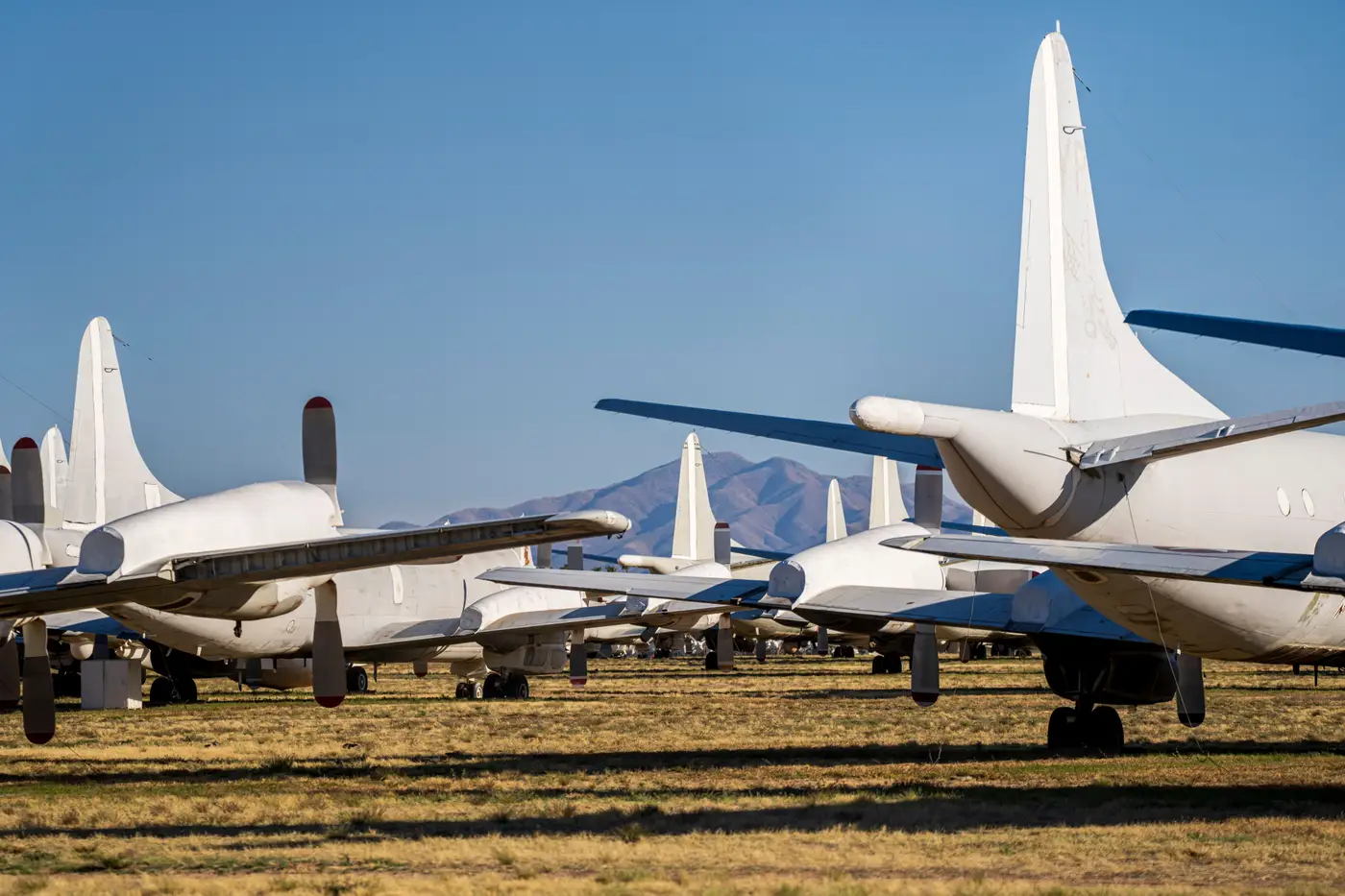
Most analysts learn to spot storage the hard way: you pull up an airport you've never looked at before, see fifty-plus narrowbodies sitting on what looks like a disused runway, and have to work out in the next five minutes whether that's a lessor's storage program or just a bad week for an airline's schedule. There's a pattern to it once you know what to look for, and it has less to do with aircraft count and more to do with geometry.
Row spacing and ground markings give it away first
Active ramp parking, the kind in front of a terminal or on a cargo apron, is built for turnaround. Aircraft sit at stands with jet bridges or tow-in nose markings, spaced for pushback and ground service equipment, and the taxiway lines leading to them are worn from constant traffic. A storage apron looks nothing like that. Aircraft are parked in tight, parallel rows, nose to tail or wingtip to wingtip, at spacing that's clearly been painted or marked out for long-term occupancy rather than daily turns. You'll often see a grid: rows of six, eight, ten aircraft at a time, evenly spaced along what used to be a taxiway or an unused runway, with the markings repainted specifically for storage rather than left over from flight operations.
The pavement itself is a tell too. A converted runway or disused taxiway used for storage usually still carries its original centerline striping underneath the newer parking marks, and the surface condition is often different from the active movement area nearby. There's no rubber staining from tire contact at speed, and the wear pattern reflects aircraft that haven't moved in months rather than aircraft braking and taxiing every day.
Site selection tells you what kind of storage you're looking at
Where the facility sits matters almost as much as what's on it. The classic desert storage apron, Mojave, Roswell, Alice Springs, Teruel, Tarbes, exists because low humidity slows corrosion and a dry climate means fewer tarps and less preservation work between inductions. If you're looking at a facility in flat, arid terrain with minimal vegetation and no obvious passenger terminal, you're almost certainly looking at long-term storage rather than an operating airline base. Compare that to a facility at a regional or former military airfield in a temperate climate, where storage tends to be shorter-term, tied to seasonal capacity swings or a lessor parking aircraft between leases rather than committing them to desert preservation.
Long-term parking rows also tend to show you the fleet mix more clearly than an active apron does, because the aircraft aren't moving and aren't obscured by ground equipment. On an operating apron, type identification from imagery means working around tugs, belt loaders, and catering trucks parked next to the aircraft. On a storage row, you're looking at clean wingspan and fuselage length with nothing in the way, which makes narrowbody versus widebody versus regional jet a much easier call. Engines are sometimes covered or removed for parked aircraft awaiting teardown, which is itself a signal: if a row has visibly fewer engines than aircraft, you're probably looking at part-out candidates rather than aircraft being held for return to service.
The other giveaway is turnover, or the lack of it. Pull the same storage apron on two dates a few weeks apart and an active ramp shows aircraft rotating in and out constantly. A genuine long-term storage facility barely changes week to week. Aircraft that do move tend to shift within the facility, towed from one row to another as the operator reorganizes by type or lease status, rather than departing the airport altogether.
None of this requires a trained eye for every tail number or a background in imagery analysis. It's pattern recognition: row geometry, site climate, and how much the apron changes over time. Once you've checked a handful of known storage facilities against these markers, picking out a new one in an unfamiliar country gets a lot faster.
If you're tracking storage and parked-fleet counts across multiple sites on a recurring basis, doing this manually for every apron on your watch list stops scaling fast. Aircraft Counting turns that same read, aircraft counted and typed by row, into a daily table for the bases you follow.
Send us an apron you track and we'll show you what a daily count of it looks like.