B
How to tell a freighter conversion from a passenger aircraft in satellite imagery
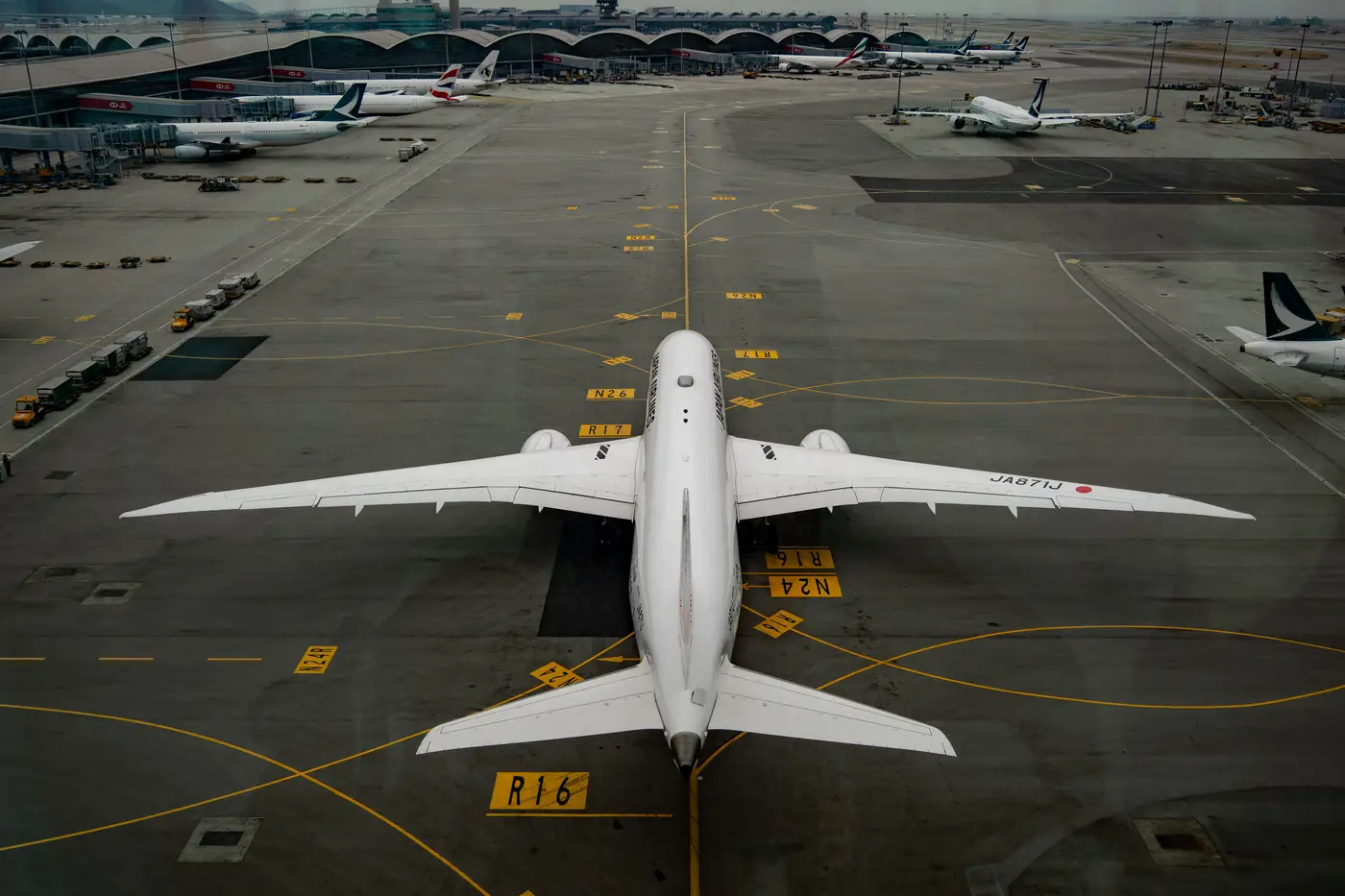
A lessor's asset manager emails a link to a tail number sitting on an apron in Kazakhstan and asks: is that the 737-800 we financed, or has it already gone through a P2F program somewhere we didn't track? Nine times out of ten, the answer has to come from imagery, because nobody has a ground contact at that airport. Here's what you can actually read off a top-down shot, and what you can't.
What a passenger-to-freighter conversion changes, and what it doesn't
A P2F conversion (737-800BCF, A321P2F, 757 freighter programs, whatever the type) changes the inside of the aircraft and a handful of exterior details. It adds a main deck cargo door on the forward left fuselage. It plates over the passenger windows. It sometimes adds a strengthened floor and cargo-handling system you'd never see from above at all.
What it does not change is the airframe's outer shape, wingspan, or tail height. From directly overhead at sub-metre resolution, a converted 737-800 and a passenger 737-800 are the same silhouette. If you're trying to tell the two apart by fuselage outline alone, you're going to be wrong a lot.
The cargo door is the one physical feature that sometimes shows up, as a faint rectangular seam on the forward fuselage if the sun angle and resolution cooperate. At 0.5 m GSD that seam is maybe one to two pixels wide. It's a confirming detail when you can see it, not something to build a detection rule on.
The signal that works: where the aircraft is parked
Forget trying to read the airframe. Read the apron instead. Freighter aircraft don't sit at passenger gates. They sit at cargo ramps, often away from the terminal, often nose-in to a warehouse rather than connected to a jet bridge. If you see a 757 or an A300 parked for three straight days at a dedicated freight stand with no jet bridge in contact and no passenger ground equipment around it, that's a freighter, full stop, regardless of what the fuselage looks like.
The ground equipment tells the rest of the story. ULD dollies, cargo loaders, and the flat-deck trucks that service belly and main-deck freight look nothing like a passenger stand's baggage tugs and catering trucks. A passenger aircraft on a cargo ramp with loaders parked at its nose is a strong tell that it's either a freighter conversion or being used in a combi or ACMI charter role for that rotation. None of this requires resolving a window line. It requires knowing the apron layout at that airport and watching it over several days, not one frame.
Building confidence without a ground source
This workflow is a cross-check built from several signals that converge on an answer. You start with what's known: the operator's published freighter fleet list, the registration, the base airport's cargo ramp footprint. You then watch where a given airframe sits across consecutive days. An aircraft that moves between the passenger terminal and the cargo ramp on different days is probably doing passenger ops one day and ACMI freight the next, a pattern that shows up more often than people expect once you're counting daily. An aircraft that never leaves the cargo side, surrounded by freight-handling equipment, week after week, is about as close to a confirmed conversion as imagery alone gets you.
This is where a standing daily count of what's on an apron does more for you than one well-timed tasking. A single clear image of a tail number tells you it was there that day. A dated table of how many aircraft were parked and roughly what type, built up day over day, tells you whether that airframe is behaving like a freighter or a passenger jet, which is usually the question a lessor or fleet analyst is asking. Aircraft Counting builds that daily, dated read of an apron from VHR imagery, aircraft count and broad type, so the pattern is sitting in front of you instead of something you have to reconstruct from one lucky frame.
If you're tracking a base you can't put a person at, start with a daily read of what's parked there and let the pattern do the identifying.