B
How to tell a stored aircraft from a parked aircraft in satellite imagery
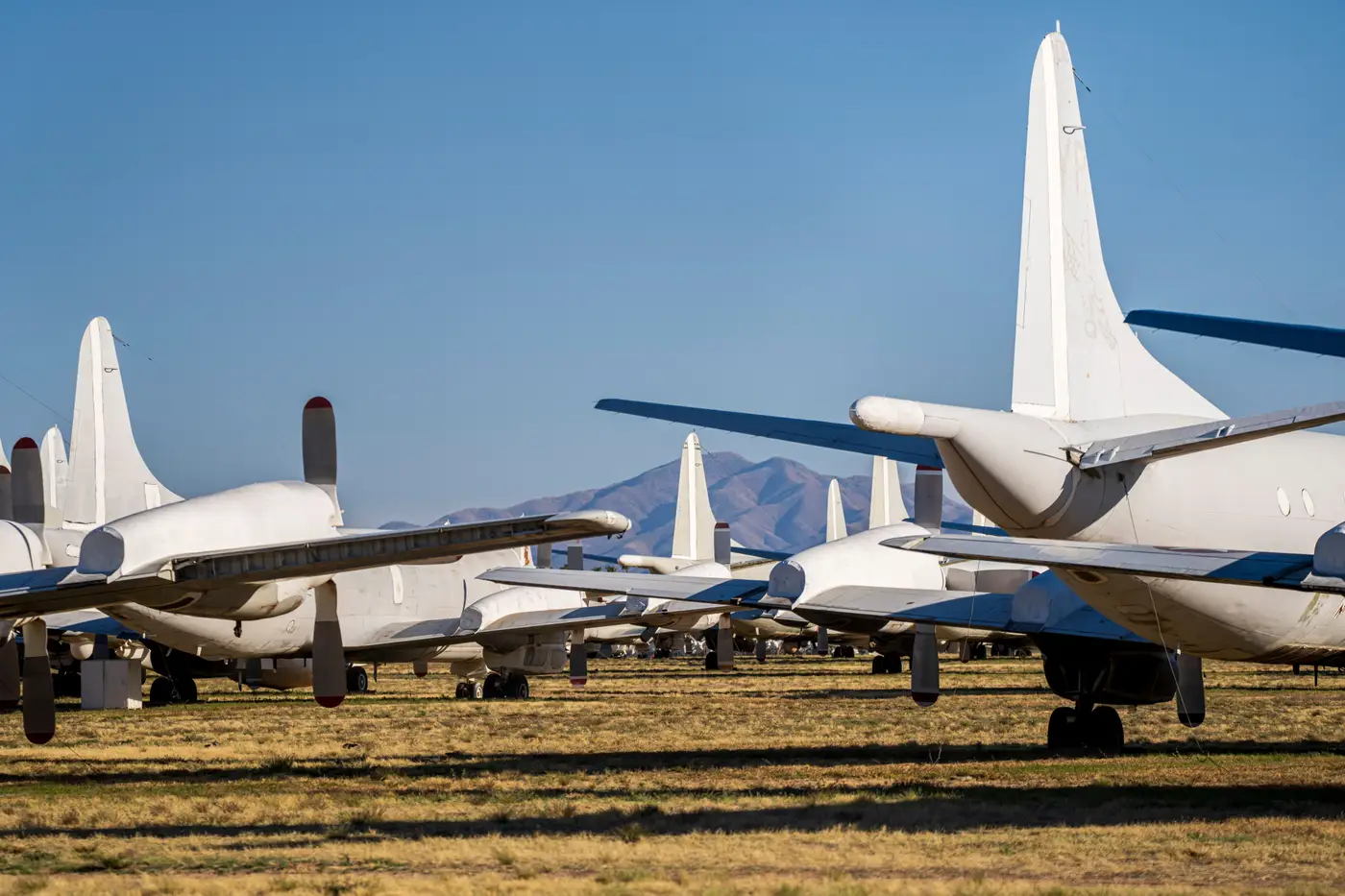
An aircraft sitting on an apron in a single satellite frame doesn't tell you much on its own. It could be between flights, waiting on a maintenance slot, or three months into storage with the engines plugged and the logbooks closed. Fleet analysts and lessors who track base activity from imagery alone need a few reliable tells, because nobody's sending a ground spotter to Victorville or Teruel every week to confirm what the pixels suggest.
What storage actually looks like from above
A few patterns show up often enough in VHR imagery to be worth watching for:
Position on the field. Working aircraft cluster near gates, cargo ramps, or line maintenance stands, close to the infrastructure that turns them around. Stored airframes tend to sit in rows along the perimeter, on disused taxiways, or on grass infill at a desert facility, parked nose-to-tail or wingtip-to-wingtip in neat ranks that have nothing to do with gate assignments.
Covers and plugs. Operators protecting an aircraft for anything longer than a short layover will cap the engines, pitot tubes, and sometimes the static ports. At sub-half-metre resolution these show up as a change in surface texture and, on engine inlets, a visible colour break where a plug sits flush against the cowling. Red "remove before flight" streamers sometimes show as small bright flags near the nose gear or engine, though they're easy to miss on a single frame and not something to rely on alone.
No ground support kit. A jet getting ready for its next sector usually has a GPU cart, air start unit, or at least a set of wheel chocks and a tug nearby. An aircraft in storage has none of it. The absence of clutter around the airframe is often a stronger signal than any single feature on the aircraft itself.
Surface condition. Paint fading unevenly, streaking from standing water, or a chalky look to the fuselage top all point to weeks or months of uninterrupted sun exposure rather than a quick turn.
None of these is conclusive by itself. A maintenance-ferry aircraft waiting on a part might sit uncovered with no GPU for a few days and look, from one image, exactly like something headed for long-term storage. That's the limit of a single snapshot, no matter how sharp the imagery is.
Why one image rarely settles it
Persistence is the real tell. An airframe that occupies the same apron position, in the same orientation, across weeks of imagery is behaving like a stored asset regardless of whether you can resolve the engine plugs. An airframe that disappears from the ramp and reappears a few days later, or shows up in a different spot each pass, is working the schedule.
You only see that pattern by comparing the same patch of ramp across many dates, and that gets harder when you're watching a dozen bases and trying to keep the count consistent from one analyst to the next. A dated, repeatable read of the same apron, pass after pass, turns "this looks stored" into "this airframe hasn't moved in six weeks." That's the gap a daily count of what's sitting on the ramp is built to close. A running record of how many aircraft are on an apron and roughly what type, day after day, lets the storage-versus-active question answer itself from the pattern instead of from a guess on any one image.
If you're trying to track whether a lessor's airframes are quietly piling up at a storage facility or actually cycling through revenue flights, that kind of repeat read is worth setting up before the next lease renewal conversation.