B
Storage or teardown: how to read aircraft condition in satellite imagery
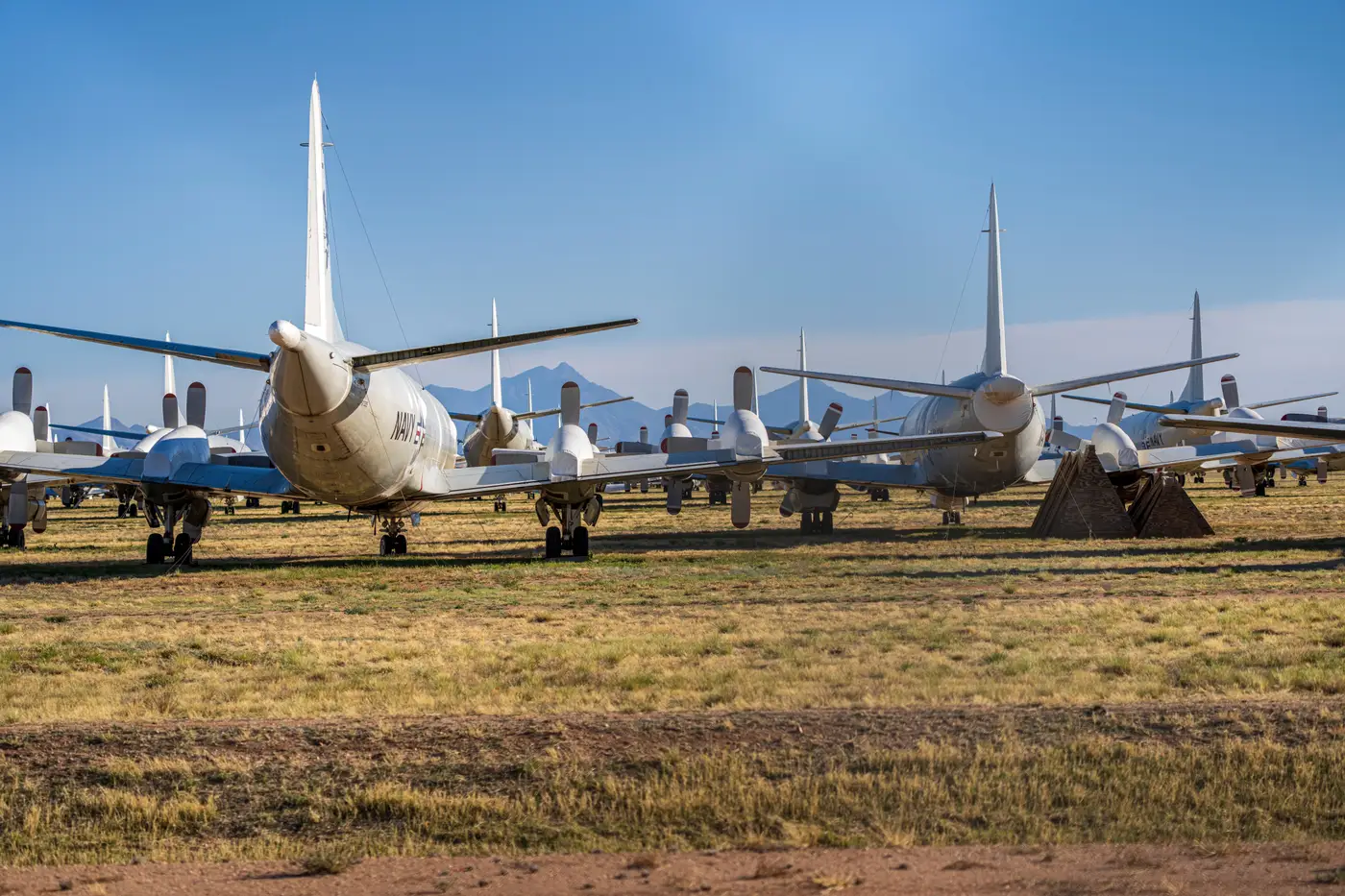
An airframe sitting on a ramp at Mojave, Marana, or Teruel can mean two very different things for a lessor's book value. One is a storage candidate waiting out a lease gap or a market dip, fully intact, insurable, flyable within days of a ferry crew showing up. The other is a part-out candidate, already being cannibalized for engines, APUs, and avionics, worth more in pieces than as a whole. From ground level the difference is obvious. From a satellite pass, you're reading a handful of tells and weighing them against each other.
Markings and paint: the first tell
The fastest signal is whether the livery is still there. An aircraft headed into long-term storage usually keeps its operator paint and registration intact, sometimes with a storage company's tail logo added over the top. The owner wants the option to pull it back into service without a repaint, and a lessor remarketing the frame wants prospective buyers to see exactly what they're buying.
A teardown candidate tells a different story. Operators strip the registration and major logo elements before handing an airframe to a dismantler, partly for brand reasons and partly because paperwork follows the tail number. In imagery this shows up as a grey or primer-patched fuselage where the titles used to be, sometimes with the registration painted out in a visibly different shade than the surrounding skin. If you can make out a wing-root logo or belly titles still crisp against a faded fuselage, that's usually a frame that's been sitting a while but hasn't been scheduled for breakdown yet.
Engine removal signs and what's missing
This is where resolution matters more than anything else. A stored aircraft typically keeps its engines on the wing, sometimes with intake and exhaust plugs visible as small dark discs at each nacelle, and the APU inlet covered. A part-out candidate is often missing an engine outright, or both, well before the rest of the frame is broken down, because engines and QEC kits carry the highest resale value and get pulled first.
In a top-down VHR read, a missing engine shows as a gap in the nacelle silhouette under the wing, sometimes with a visible stand or dolly parked underneath where the powerplant used to hang. Landing gear tells a similar story: stored aircraft sit on their own gear, often with wheel chocks and sometimes ground locks visible as small cross-braces; frames well into teardown are occasionally found with main gear partially retracted or supported on jacks because the gear itself has been scheduled for removal too.
Nose and tail sections are worth a second look. A preserved cockpit windows and radome, no visible panel removal, points to storage. Open avionics bays, a missing nose radome, or a tail cone pulled back for APU access are consistent with a frame already being worked.
Where it's parked tells you almost as much as how it looks
Storage facilities segregate by intent, and that shows up in apron layout even before you zoom in on an individual tail. Rows of intact aircraft parked nose-to-tail in tight, even spacing with consistent orientation are classic long-term storage rows, maintained that way for access and for periodic engine runs. Part-out aircraft tend to drift toward the edges of the facility or into a dedicated scrapping yard, parked less uniformly, often alongside a scatter of removed components, ground support equipment, or a visible debris field once skin panels start coming off.
Cross-referencing position against the visual condition of the airframe is the reliable method. A frame with intact paint sitting in the main storage rows is very likely still flyable inventory. A frame with stripped markings and a missing engine sitting off to one side of the facility is very likely already past the point of return to service.
None of this replaces a physical inspection before a transaction closes, but for a fleet analyst watching dozens of tails across several facilities, imagery is the only way to keep a current read on which frames moved from one category to the other without a site visit every month. Aircraft Counting turns that kind of apron-wide check into a daily, dated count of what's actually parked at the bases you track, so a shift in ramp activity shows up before the next physical survey would.
If you're watching storage and teardown activity across more than one base, it's worth seeing what a daily apron count can show you.